 Study guide

A few of the scientific properties and industrial uses of the element tungsten are covered. The mineral wolframite is a primary source for the metal. It has a monoclinic crystal structure and high density. The density is sometimes leveraged for military applications, such as in the manufacture of armour-piercing projectiles and defensive plating. Its performance in the now outdated incandescent light-bulbs as filaments that emit light when hot, is metallurgically interesting. We touch on the mining process in Cornwall, highlighting historical extraction sites and the methods used to separate minerals from waste spoils.
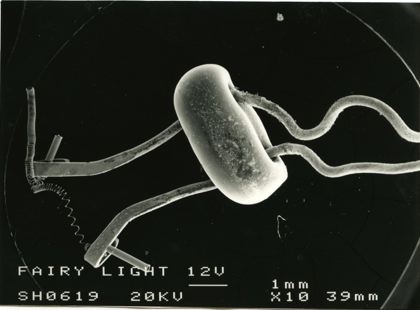
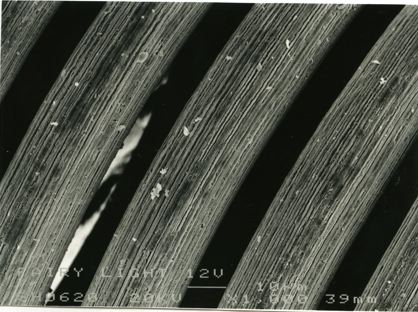
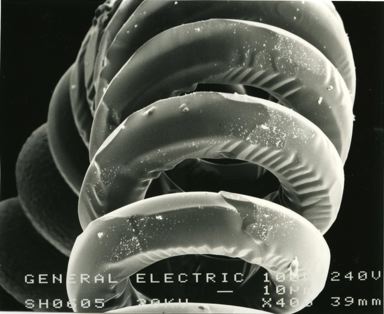
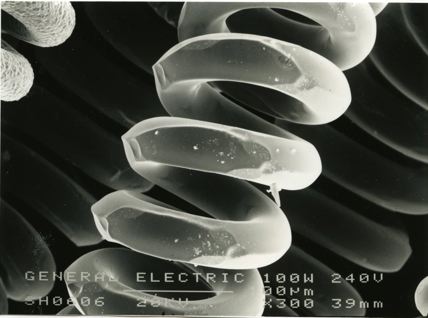
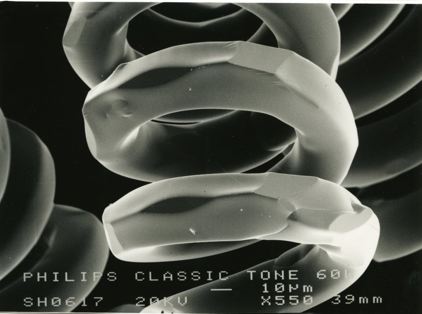
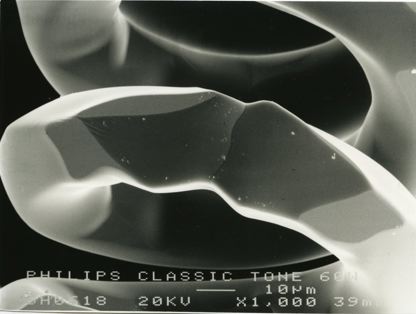
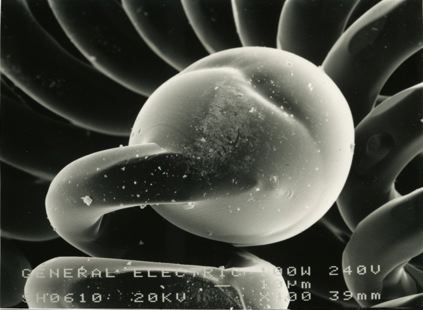
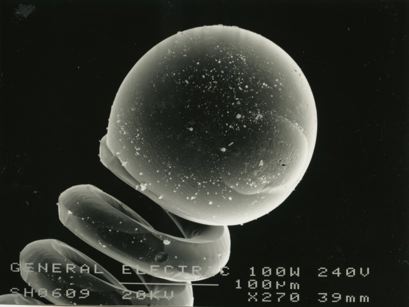
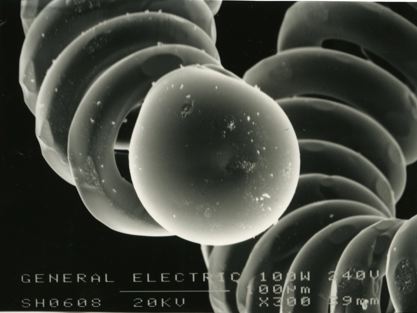
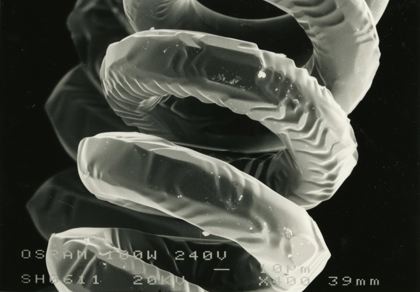
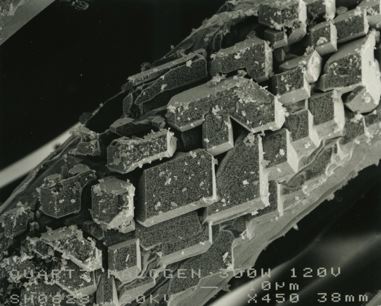
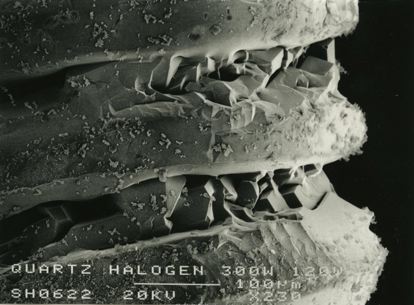
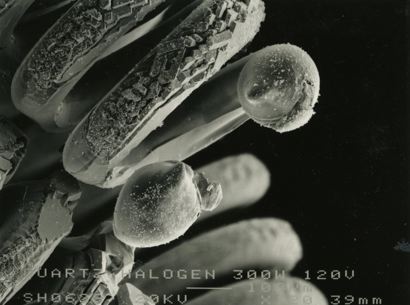
These micrographs were given to me as part of my undergraduate project at The University of Sheffield: Case study on tungsten filament lamps. The report includes a discussion of the manufacture of tungsten filament lamps, some of the physics involved and alternative light sources.
The project was taught with great enthusiasm by Professor G. W. Greenwood.
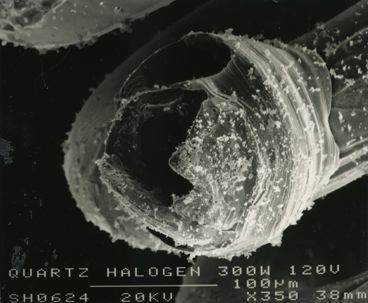
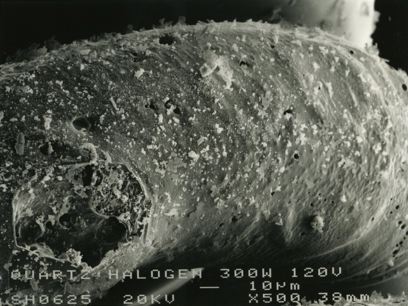
The extraction of tungsten from wolframite ((Fe, Mn)WO4) involves a series of hydrometallurgical and chemical steps. Because tungsten has the highest melting point of all metals (3422 °C), it cannot be smelted like iron or copper. Instead, it is extracted as a high-purity chemical compound and then reduced to a metallic powder.
Here is the step-by-step processing framework used to isolate pure tungsten from wolframite ore.
Crude ore mined from veins typically contains less than 1% tungsten trioxide (WO3).
The concentrated wolframite powder must be broken down chemically to separate the tungsten from the iron and manganese.
The solution is filtered to remove the solid iron and manganese residues.
The liquid sodium tungstate solution still contains trace impurities such as silicon, phosphorus, arsenic, and molybdenum.
Ammonium paratungstate (APT) is the primary commercial precursor for all downstream tungsten products.
To remove the remaining ammonia and moisture, the APT crystals undergo thermal decomposition (calcination).
Because of tungsten's extreme melting point, the final conversion to metal is achieved via a solid-state gas reduction.
The final output is a grey, fine tungsten metal powder. This powder is subsequently consolidated into solid components or alloys using powder metallurgy techniques (pressing, sintering, and hot working).
Images courtesy of P. D. Bhadeshia.
Wolframite, (Fe,Mn)WO4, has a monoclinic lattice in which a = 0.477 nm, b = 0.573 nm, c = 0.498 nm, β = 90.2°, space group P2/c. It is a valuable source of tungsten that can be used in armaments.
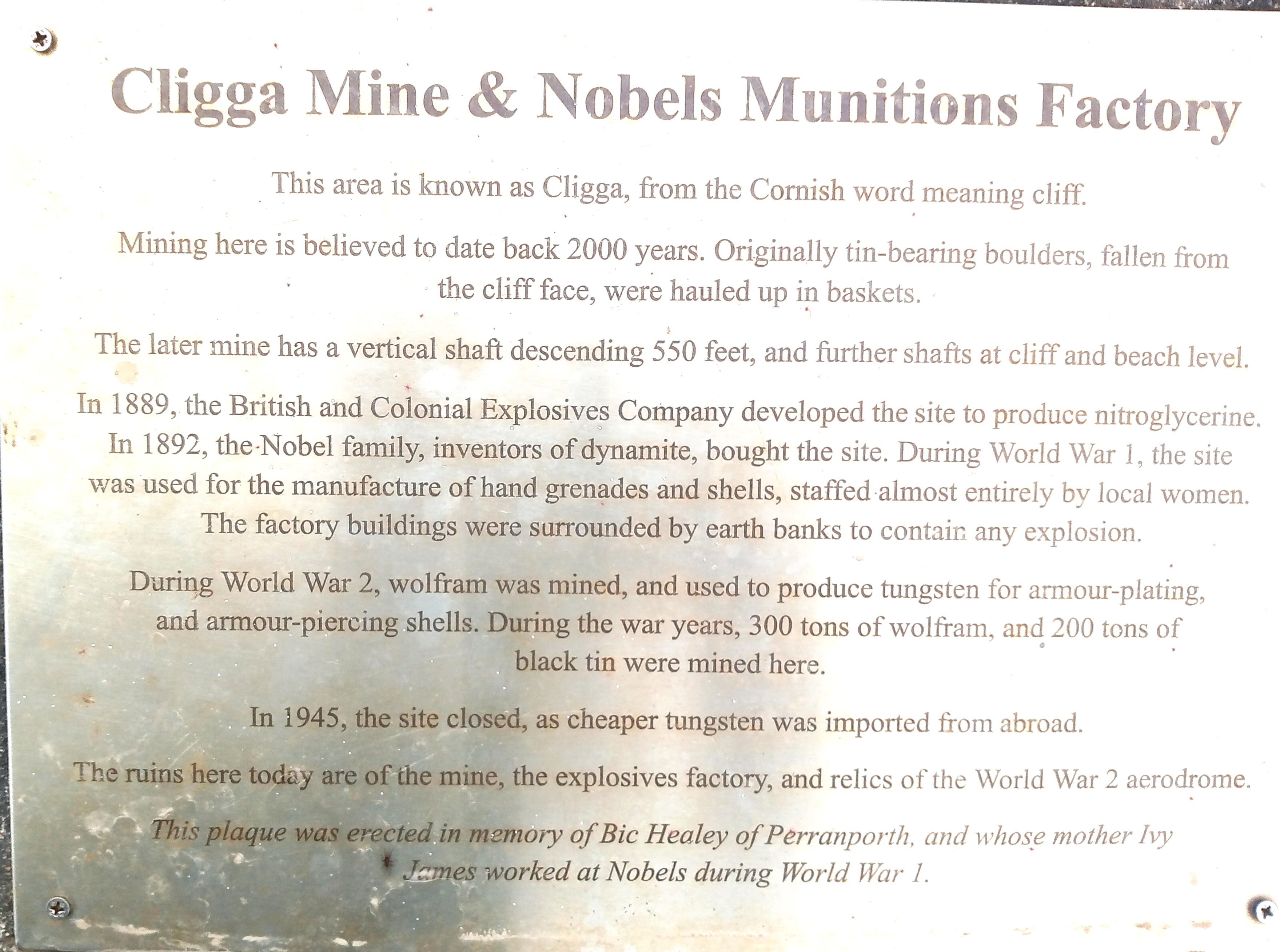
The Cligga Mine & Nobels Munitions Factory initially was focused on making explosives but during the Second World War, tungsten mining became important. This enabled armour plated with tungsten and also shells that could penetrate ordinary armour, presumably as kinetic-energy projectiles given the density of tungsten at 19.3 g cm−3.
Cligga Head wolframite mine landscape, Cornwall.
This is one of the settling tanks at Cligga Head wolframite mine. The purpose is to allow sedimentation in order to separate out relatively clear water from mineral spoils.

Settling tank configuration at Cligga Head wolframite mine.