 Podcast about the work
The mechanism of bainite growth in steel is investigated by comparing traditional ideas with high-resolution experimental data. Imaging-atom-probe studies demonstrate that substitutional solutes do not segregate at the interface, thereby disproving the solute-drag theory and the local equilibrium model. Furthermore, direct observations via photo-emission electron microscopy reveal that bainite sub-units expand at speeds significantly faster than those predicted by carbon diffusion control under paraequilibrium conditions. The findings suggest that bainite forms through a shear-based mechanism rather than through long-range atom redistribution. Ultimately, the work leads to the conclusion that conventional theories regarding equilibrium and solute-induced drag are insufficient to explain the kinetic reality of the bainite reaction.
This technical report examines how carbon concentrations influence the formation of allotriomorphic ferrite within low-alloy steel weld deposits. By utilising approximate paraequilibrium transformation theory, the researchers developed a model to predict microstructural changes based on the diffusion-controlled growth of ferrite at grain boundaries. The study reveals that higher levels of carbon successfully reduce the volume of allotriomorphic ferrite, which in turn facilitates the development of other constituents like acicular ferrite. Furthermore, the data suggests that these structural variations are primarily driven by carbon chemistry rather than the presence of oxygen or sulphur inclusions. These findings, originally presented at a 1983 materials science symposium, provide a mathematical framework for understanding the cooling kinetics of manual metal-arc welds.
Proceedings of an International Conference on Phase Transformations in
Ferrous Alloys,
Philadelphia, A.I.M.E., eds A. R. Marder and J. I. Goldstein, 1984, pp. 335-340
Comprehensive review on allotriomorphic ferrite.
 Published 2025 |
 Published 2024 preview, video |
 Free download |
 Free download |
 Rails, 2024 |
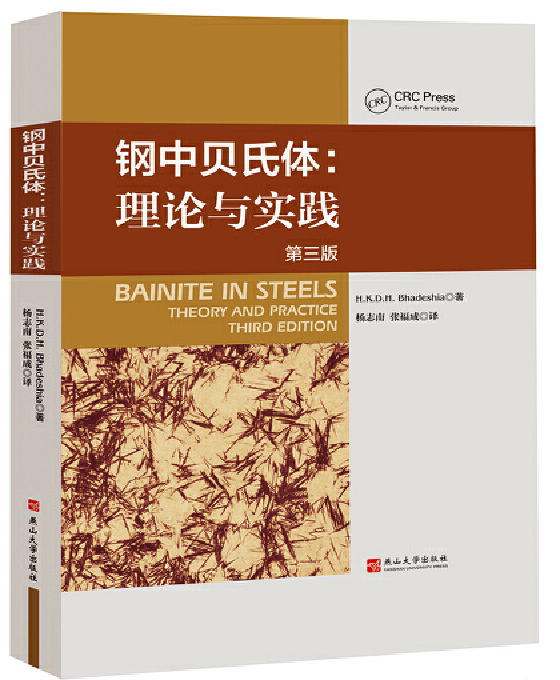 Translation, 2020 |
 Published 2021 |
 Published 2026 video |
| PT Group Home | Materials Algorithms |