
Queen Mary University of London University of Cambridge

Theoretical Analysis of Cementite Composition During Tempering of Bainite

Materials Science and Technology, Vol. 5 (1989) 977-984, by H.K.D.H. Bhadeshia

An attempt has been made to model the kinetics of changes of composition in cementite during the aging of creep resistant low alloy steels of the type used in power plant. The method gives insight into safe ways of extrapolating short-term data and predicts a previously unknown carbide particle-size effect.

This scientific paper presents a theoretical model designed to track how the chemical composition of cementite changes over time in low-alloy steels used for power plants. The research specifically examines the diffusion and redistribution of alloying elements between ferrite and cementite during the tempering of bainite, a process critical for estimating the remaining service life of industrial components.

By utilising a finite difference method, the author demonstrates that particle size significantly influences the speed at which carbides reach equilibrium. The study provides analytical solutions that align with experimental data, offering a framework to understand how microstructural changes reflect a material's thermal history.

Ultimately, the work suggests that monitoring these compositional shifts can lead to more accurate assessments of creep resistance and structural integrity in high-temperature environments.

Download publication

Audio podcastAudio podcast

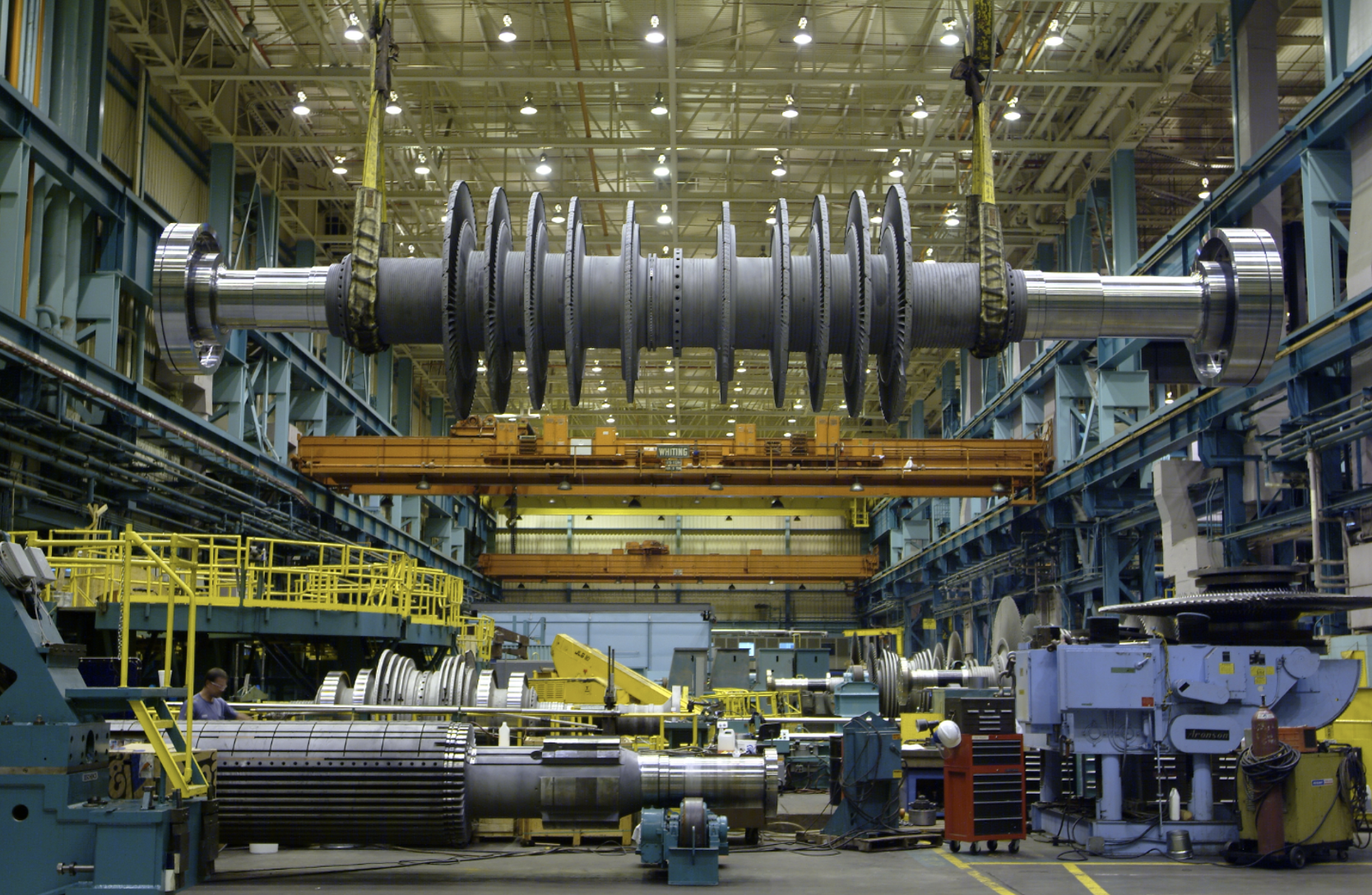
steam turbine

Theoretical Analysis of Cementite Composition During Tempering of Bainite: Study Guide

A review of theoretical models and experimental observations regarding chemical composition changes in cementite during the ageing of creep-resistant low-alloy steels.

Short-Answer Quiz

Instructions: Answer the following questions based on the provided research context.

1. What is the primary industrial motivation for studying the chemical composition of carbides in power plant steels? The primary motivation is to estimate the "remanent life" or remaining creep life of components operating at high temperatures. Because carbide composition changes predictably over time and temperature, it serves as a microstructural record of the component's thermal history. 2. How does the formation of bainite differ from the formation of pearlite regarding the cooperative growth of phases? Unlike pearlite, which involves the cooperative growth of ferrite and cementite, bainite formation is non-cooperative. The ferritic component of bainite forms first as a supersaturated phase, and carbides subsequently precipitate from either the residual austenite or the bainitic ferrite. 3. What is the difference between carbide precipitation in upper bainite versus lower bainite? In upper bainite, carbides precipitate from carbon-enriched residual austenite after carbon is rejected from the bainitic ferrite. In lower bainite, which has a high dislocation density, carbides (such as ε-carbide or cementite) precipitate directly within the bainitic ferrite. 4. Why is the initial concentration of substitutional alloying elements in bainitic cementite often similar to the bulk alloy concentration? Bainitic transformation occurs at temperatures where the redistribution of substitutional elements like chromium is limited. Consequently, the cementite that forms initially inherits the metal-to-iron ratio of the parent phase, resulting in a partitioning coefficient near unity. 5. Define the "partition coefficient" (kZ) as used in the context of this research. The partition coefficient kZ is defined as the ratio of the equilibrium concentration of a specific alloying element (Z) in cementite to its equilibrium concentration in ferrite. It determines the saturation levels the cementite will eventually reach during prolonged tempering. 6. What is the relationship between cementite particle size and the time required to reach equilibrium? The time required to reach a specific alloy concentration is strongly dependent on particle thickness, specifically varying with the square of the thickness (xθ2). Smaller particles reach equilibrium concentrations much faster than larger particles. 7. Describe the phenomenon of "soft impingement" in the diffusion process. Soft impingement occurs when the diffusion fields of adjacent particles overlap. This overlap generally leads to a slowing down of the solute enrichment process as the available concentration gradients in the matrix decrease. 8. How does the finite difference method (FDM) model the ferrite-cementite aggregate? The model treats the aggregate as a composite diffusion couple where a central slab of cementite is "welded" on both sides to slabs of ferrite. The space is then divided into a discrete number of slices (nθ and nα) to calculate the flux and concentration changes over time. 9. Why must the starting composition be adjusted when modelling service-exposed material? Service-exposed material has already undergone significant enrichment during its operational life. Modelling this requires adjusting the initial state to account for the pre-existing thermal history so that the simulated enrichment aligns with experimental observations. 10. What is the observed relationship between the enrichment of cementite and tempering time (t)? Experimental data and theoretical models suggest that the concentration of elements like chromium and manganese in cementite increases approximately with t1/3. This relationship provides a reasonable fit for the kinetics of composition changes.

Answer Key Summary

Concept Key Point
Industrial Goal Estimating remanent creep life via microstructural "clocks".
Growth Type Pearlite is cooperative; bainite is non-cooperative.
Enrichment Rate Proportional to the square of particle thickness (xθ2).
Kinetics Enrichment typically follows a t1/3 time relationship.

Essay Questions

Glossary of Key Terms

Term Definition
Bainite A microstructural product of austenite transformation consisting of ferrite and carbides.
Cementite (θ) An iron carbide (Fe3C) that can incorporate alloying elements like chromium or manganese.
Creep Life The expected duration a component can withstand constant stress at high temperatures before failing.
Diffusion Coefficient (D) A factor representing the rate at which atoms move through a lattice.
Finite Difference Method A numerical technique used to solve differential equations by discretising spatial and temporal domains.
Paraequilibrium A state where carbon has reached equilibrium distribution, but substitutional alloying elements have not.
Soft Impingement The slowing of diffusion processes due to the overlap of diffusion fields from neighbouring particles.
Pearlite in steels
Published 2025
Audio summaries
Steels 5th edition Published 2024
Bainite 3rd edition Free download
Crystallography 1st edition Free download Audio, video summaries
Bainite at play Published 2026 video
Theory of transformations in steels Free download
Functional Materials Free book Hard copy
Phase transitions
Free book,
source (CC-BY)
Isolation Free download
rail steels
Rails, 2024
Audio summary
Bainite in Steels, Chinese edition Translation, 2020
Innovations in everyday engineering materials
Published 2021