
This collection of academic literature focuses on the metallurgical properties of retained austenite and its complex transformations within various steel alloys and cast irons. The research investigates the thermal and mechanical stability of this phase, examining how carbon distribution and crystallography influence its behavior during heat treatment processes. Specific attention is given to the role of austenite in TRIP steels and its impact on the ductility and embrittlement of martensitic and bainitic microstructures. Key foundational texts include doctoral theses that explore the reaustenitisation of alloys and the broader theoretical significance of austenite in material science. Collectively, these sources provide a detailed technical framework for understanding how microstructural changes dictate the physical performance of high-strength metals.
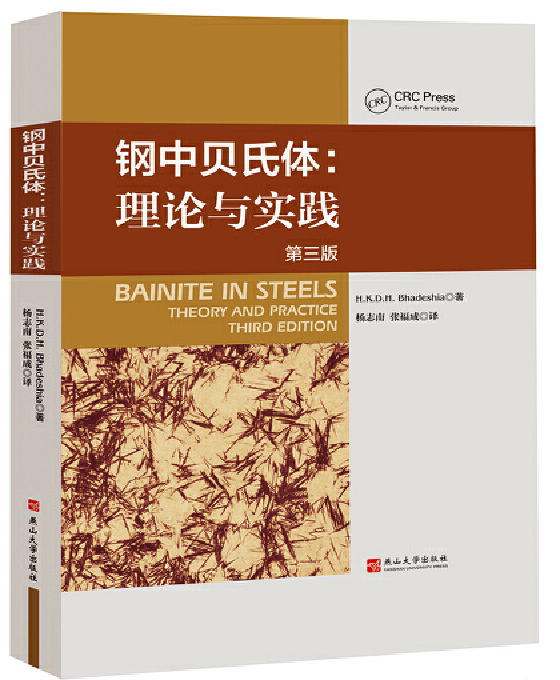
Ph.D. thesis, by Harry Bhadeshia, University of Cambridge, 1979

|
Ph.D. thesis, by Ursula Ruth Lenel, University of Cambridge, 1980
|
This study guide provides a comprehensive overview of research regarding retained austenite, its stability, and its role in various steel microstructures and alloy systems.
Instructions: Answer the following questions in 2–3 sentences based on the themes and topics identified in the source context.
1. Carbon in retained austenite is a critical factor determining the phase's stability and final mechanical properties. Research focuses on measuring these levels—often via atom probe—to understand how carbon influences the transformation behaviour during quenching.
2. The phenomenon of tempered martensite embrittlement is driven by the interaction between retained austenite and cementite. The breakdown or presence of these components during the tempering process can lead to a significant loss of toughness in the material.
3. The distribution of retained austenite is not random; it is heavily influenced by the crystallography of the surrounding martensite. This relationship dictates how the austenite phase is spatially arranged within the microstructure.
4. Within bainitic microstructures, retained austenite often manifests in the form of thin films. These films are distinct structural features that contribute to the overall stability and performance of bainitic steels.
5. Atom probe measurement is utilised to provide high-resolution data on the chemical composition of the austenite phase. Specifically, it allows for the precise measurement of carbon levels, which is vital for verifying theoretical models of transformation.
6. Estimating the amount of retained austenite in austempered ductile cast iron is essential for characterising its mechanical behaviour. The volume fraction of this phase directly impacts the material's ability to undergo transformation-induced plasticity.
7. Mechanical stabilisation refers to the processes that prevent or delay the transformation of retained austenite when subjected to stress or strain. This stability is crucial for ensuring the austenite persists under various mechanical loading conditions.
8. The research on 300M steel specifically investigates the carbon content in retained austenite during isothermal transformation. This helps in understanding how alloying elements and heat treatments affect phase stability in high-strength steels.
9. Strain partitioning involves the distribution of mechanical strain between the retained austenite and other microstructural constituents. In TRIP (Transformation-Induced Plasticity) steels, this partitioning is a key factor in how the austenite stabilises and eventually transforms during deformation.
10. Harry Bhadeshia’s 1979 thesis focuses on the general theory and significance of retained austenite in steels. In contrast, Ursula Ruth Lenel’s 1980 thesis examines the process of reaustenitisation in specific alloy steels.
Instructions: Use the following prompts to develop in-depth analyses. (Answers not provided).
| Term | Definition |
|---|---|
| Austempered Ductile Cast Iron | A specific class of cast iron treated to produce a microstructure containing acicular ferrite and high-carbon retained austenite. |
| Atom Probe Measurement | A high-resolution analytical technique used to determine the chemical identity and spatial position of individual atoms, used here to measure carbon in austenite. |
| Bainitic Microstructure | A plate-like microstructure that forms in steels at temperatures lower than those that produce pearlite but higher than those that produce martensite, often featuring retained austenite films. |
| Carbon Partitioning | The redistribution of carbon atoms between different phases (such as martensite and austenite) during heat treatment or transformation. |
| Cementite | An iron carbide (Fe₃C) that plays a significant role alongside retained austenite in the embrittlement of tempered martensite. |
| Isothermal Transformation | A phase transformation that occurs at a constant temperature over a specific duration. |
| Mechanical Stabilisation | The phenomenon where the transformation of austenite to martensite is hindered by mechanical factors such as prior deformation or strain. |
| Reaustenitisation | The process of heating a steel or alloy to a temperature where its existing microstructure transforms back into the austenite phase. |
| Retained Austenite | The austenite phase (γ) that does not transform to martensite or other phases upon cooling to room temperature and remains within the microstructure. |
| Strain Partitioning | The manner in which mechanical strain is distributed across the various phases of a multi-phase material during loading. |
| TRIP Steels | Transformation-Induced Plasticity steels, which utilise the transformation of retained austenite into martensite during deformation to improve strength and ductility. |
| Thermal Stability | The resistance of a phase (specifically retained austenite) to undergo transformation when subjected to changes in temperature. |