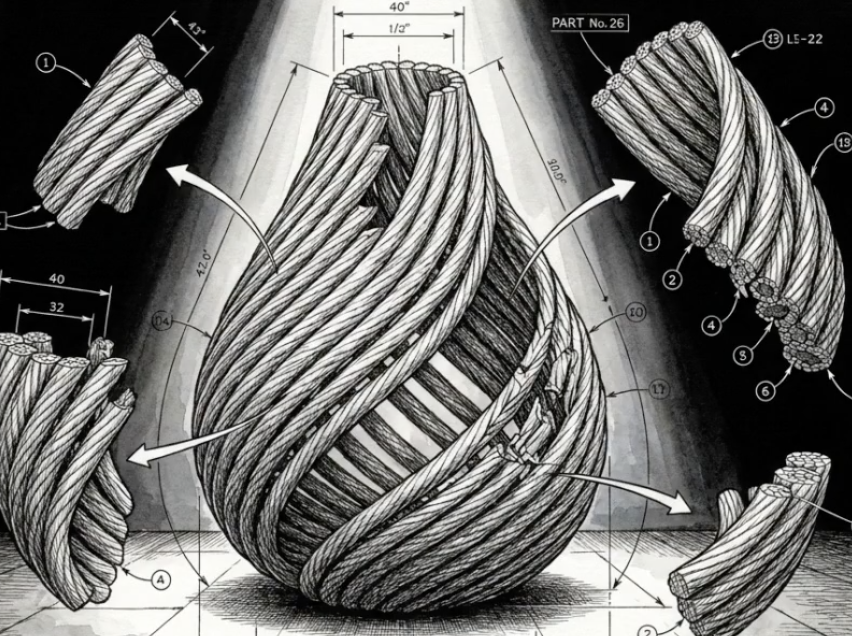

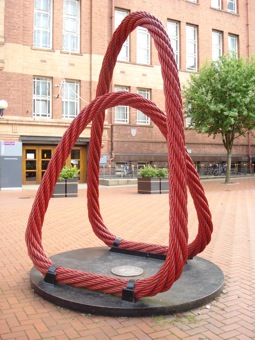
The provided text outlines a collection of resources detailing the scientific properties and industrial applications of pearlite in steel. Research articles and academic theses examine the metallurgical transformation and kinetic behavior of this structure across various chemical compositions and heat treatments. A significant portion of the material focuses on the exceptional strength of pearlitic wires, which are essential components in the construction of global suspension bridges and heavy-duty cables. Furthermore, the documentation explores computational modeling of steel hardness and the specific mechanical wear pearlite experiences in railway infrastructure. Beyond industrial utility, the sources also highlight the presence of this microstructural phase in artistic sculptures and historical metallurgy. Together, these materials serve as a technical guide to pearlite's role in modern engineering and materials science.
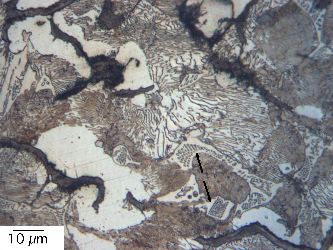
The steel has the chemical composition 0.55C, 1.10 Mn, 0.24 Si, 0.020 S, 0.022 P, 0.03 Cr, 0.02 Ni, 0.005 Mo, 0.01 Cu, 0.002 Al, 0.0002 Ti, 0.0040 N, 0.0009 O, wt%. It was heat treated to minimise the amount of allotriomorphic ferrite. The tests were conducted on 47 mm diameter discs, 10 mm wide with line contact, 1500 MPa maximum contact stress, −1% slip between contacting surfaces, with 500 dry cycles followed by distilled-water lubricated cycles.
Work carried out as part of an EPSRC funded, multi-university, Rail Research UK project. Metallurgical aspects were studied by Dr John E. Garnham and Professor Claire L. Davis of the University of Birmingham. Images taken by John Garnham.
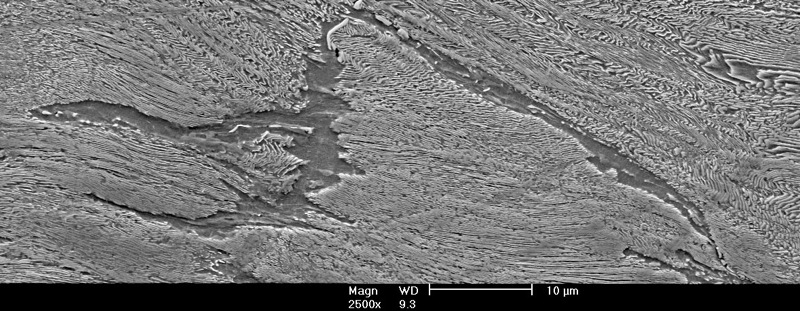
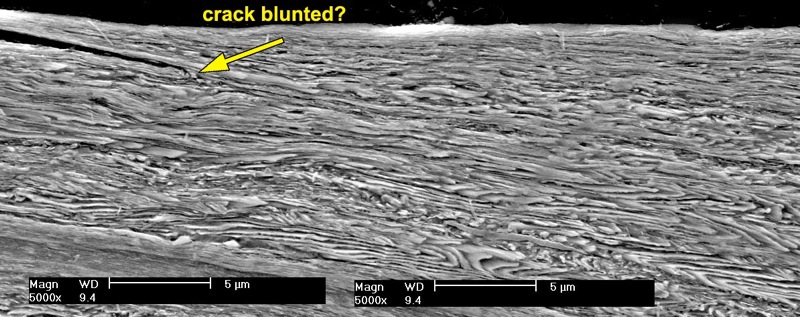
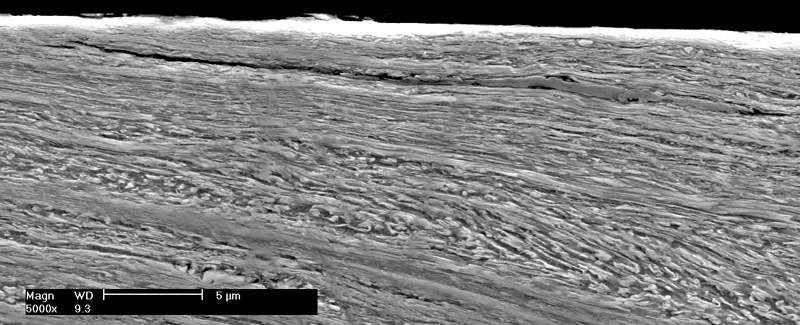
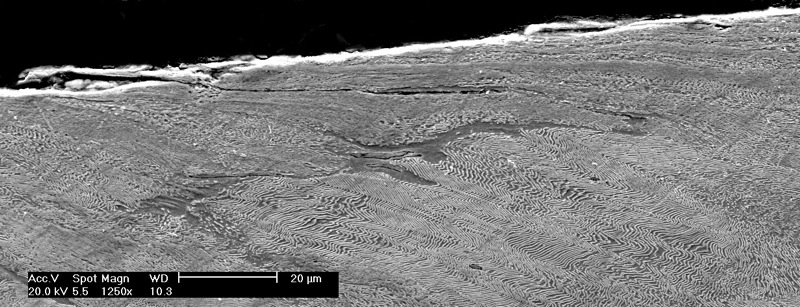
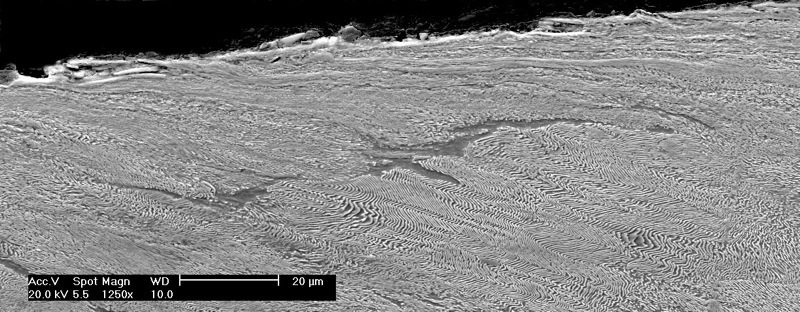
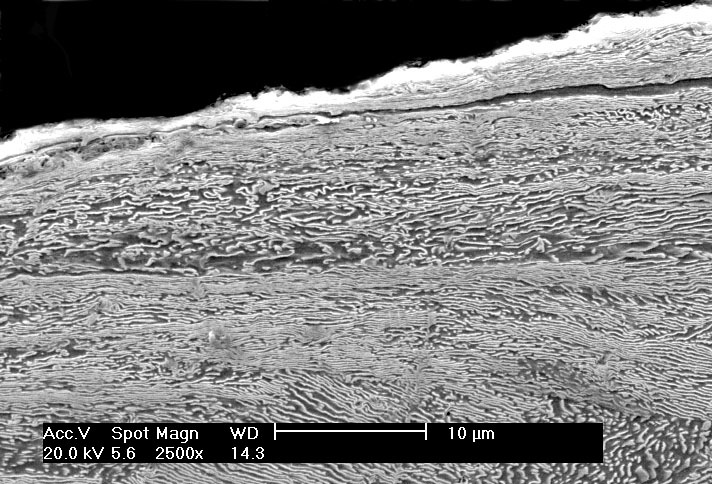
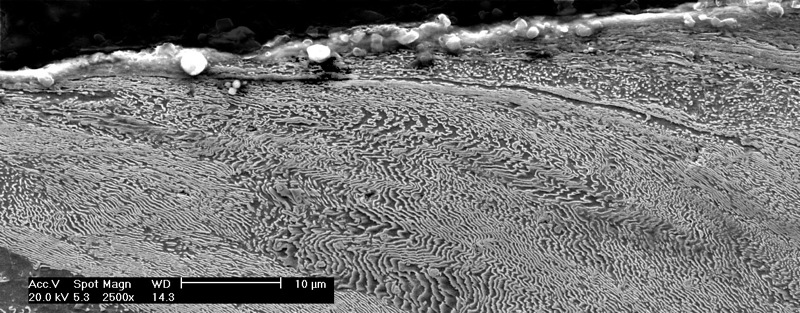
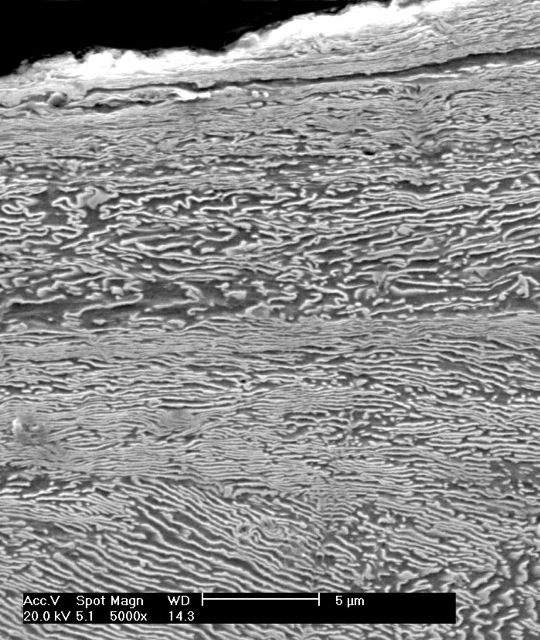
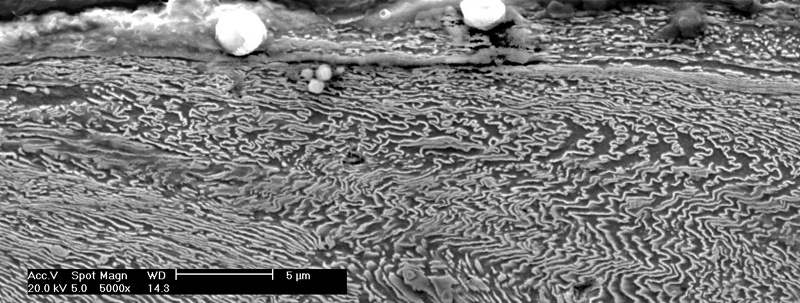
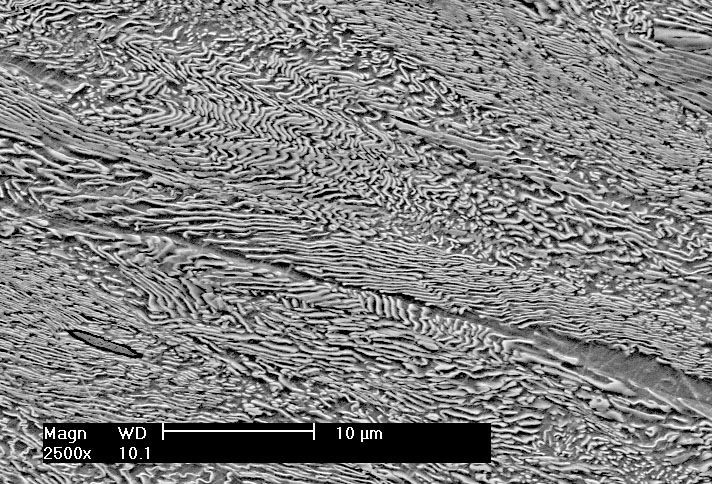
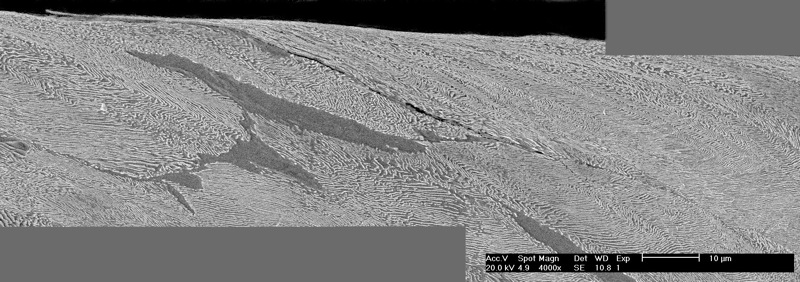
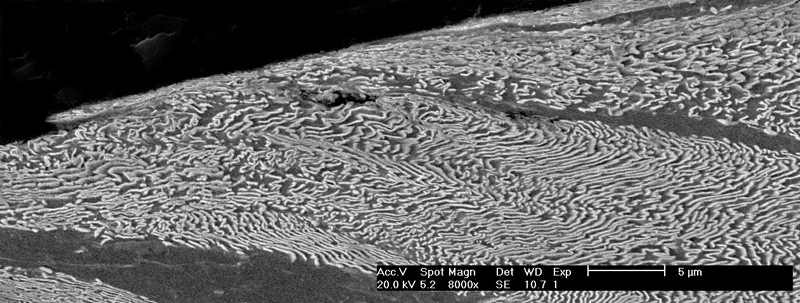
Ph.D. thesis, University of Leicester, by John Ernst Garnham, 1995

The movies below were recorded at the Adventures meeting, and cover the subject of applying electrical pulses to steel in order to influence microstructure.
This study guide provides a structured review of the metallurgical properties, research applications, and industrial significance of pearlite in steels, based on the provided research excerpts and documentation.
Instructions: Click the "Show Answer" button to reveal the metallurgical explanations for each question.
| Term | Definition |
|---|---|
| Allotriomorphic Ferrite | A form of ferrite that lacks a regular crystalline shape, which the heat treatment in rail steel studies aims to minimise. |
| Austenite | A high-temperature phase of iron (symbolised as γ) that can transform into pearlite upon cooling. |
| Cementite | An iron carbide phase (Fe3C) that is one of the two main constituents of pearlite. |
| Contact Mechanics | The study of the deformation of solids that touch each other, relevant to rail and wheel interactions under high stress (e.g. 1500 MPa). |
| Ferrite | A soft phase of iron (symbolised as α) that alternates with cementite to form the lamellar structure of pearlite. |
| Interlamellar Spacing | The distance between the alternating layers of ferrite and cementite in a pearlite colony; a key factor in determining hardness. |
| Spheroidisation | A heat treatment process that shapes the cementite in steel into spheres, affecting the material's properties. |
| Ternary Steel | Steel that contains three major components, typically iron, carbon, and one additional alloying element (e.g. Fe-C-Mn). |